
FEP vs PTFE vs PVDF: Ultimate Material Comparison Guide
1. Introduction
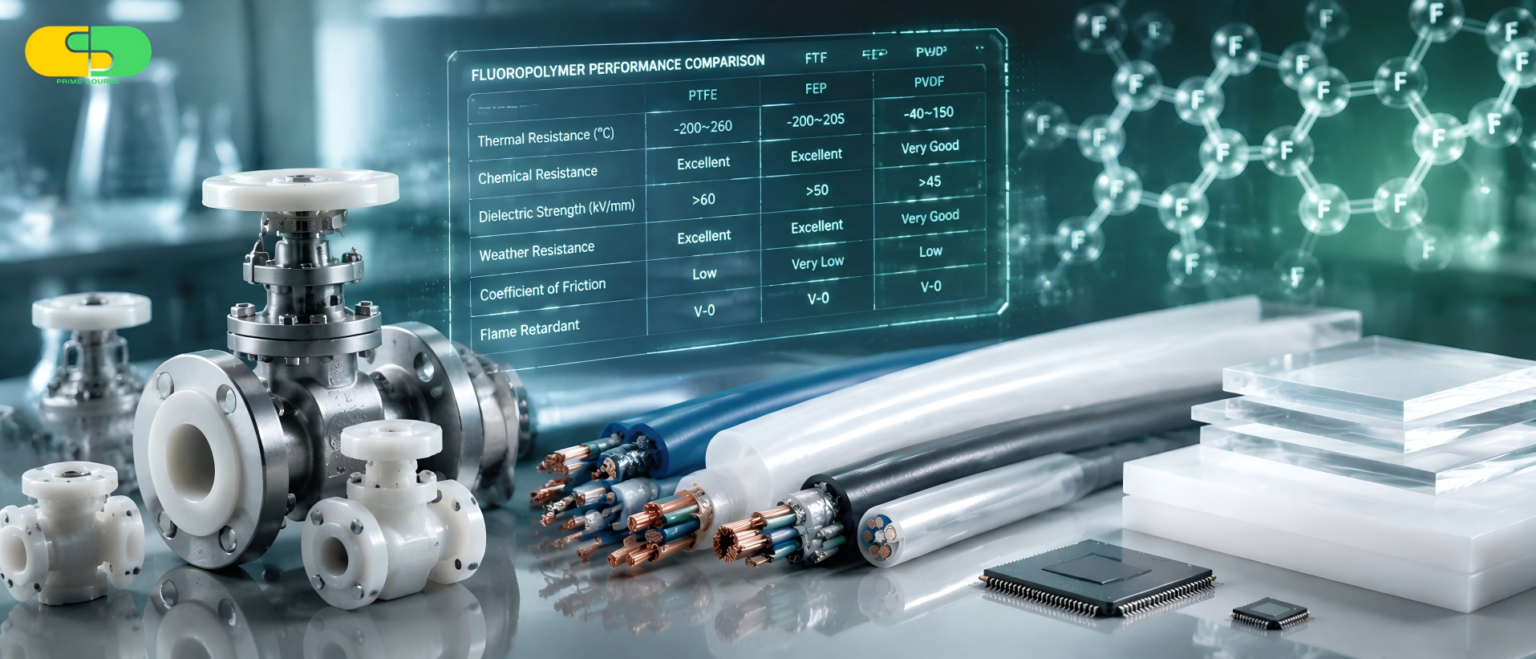
Selecting the right high-performance fluoropolymer is critical for engineers and procurement professionals operating in demanding industrial environments. While PTFE, FEP, and PVDF all belong to the fluoropolymer family, their structural differences lead to distinct mechanical, thermal, and processing characteristics. This comparison guide breaks down their core properties to help you choose the ideal material for your application.
2. Key Fluoropolymer Comparison Table
| Material | Processing Method | Thermal Performance | Chemical Resistance | Primary Industrial Applications |
| PTFE (Polytetrafluoroethylene) | Compression molding, ram extrusion (Non-melt processable) | −200℃ to +260℃
| Outstanding (Virtually universal inertness) | Gaskets, valve linings, industrial sheets, and non-stick components. |
| FEP (Fluorinated Ethylene Propylene) | Melt-processible (Extrusion, injection molding) | Up to + 200℃ | Excellent (Matches PTFE in most aggressive environments) | Wire and cable insulation, heat-shrink tubing, and tank linings. |
| PVDF (Polyvinylidene Fluoride) | Melt-processible (Easy to weld, extrude, and mold) | -40℃ to +150℃ | Very Good (Strong resistance to halogens and acids) | Chemical processing pipes, semiconductor ultrapure systems, and battery binders. |
3. Core Differences Breakdown
Processing & Fabricability: Unlike PTFE which requires specialized powder metallurgy techniques (sintering), both FEP and PVDF are true thermoplastics that can be easily melt-processed via conventional extrusion and injection molding.
Temperature Range: PTFE offers the highest continuous service temperature (+260℃), followed closely by FEP (+200℃), while PVDF is designed for moderate thermal conditions up to +150℃.
Mechanical Strength & Rigidity: PVDF stands out for its superior mechanical strength, abrasion resistance, and stiffness, whereas PTFE and FEP are softer with lower coefficients of friction.
4. Frequently Asked Questions (FAQ)
Q1: Which material offers the best chemical resistance between FEP and PTFE?
A: Both PTFE and FEP offer near-universal chemical resistance against aggressive acids, bases, and solvents due to their fully fluorinated carbon backbones.
Q2: When should I choose PVDF instead of PTFE?
A: Choose PVDF when your application requires high mechanical rigidity, impact resistance, structural weldability, or use in semiconductor ultrapure water systems and piping.
Conclusion
Understanding the nuances between FEP, PTFE, and PVDF ensures optimal performance, cost-efficiency, and safety in chemical, electrical, and mechanical applications.