
NBR Latex vs SBR Latex: Different Polymers, Different Applications
1. Introduction
When selecting synthetic polymer latices for industrial manufacturing, understanding the chemical and performance distinctions between Nitrile Butadiene Rubber (NBR) latex and Styrene-Butadiene Rubber (SBR) latex is critical. While both are widely used aqueous polymer dispersions, their unique monomer compositions dictate completely different physical properties, chemical resistances, and commercial applications.
2. Core Differences in Polymer Chemistry
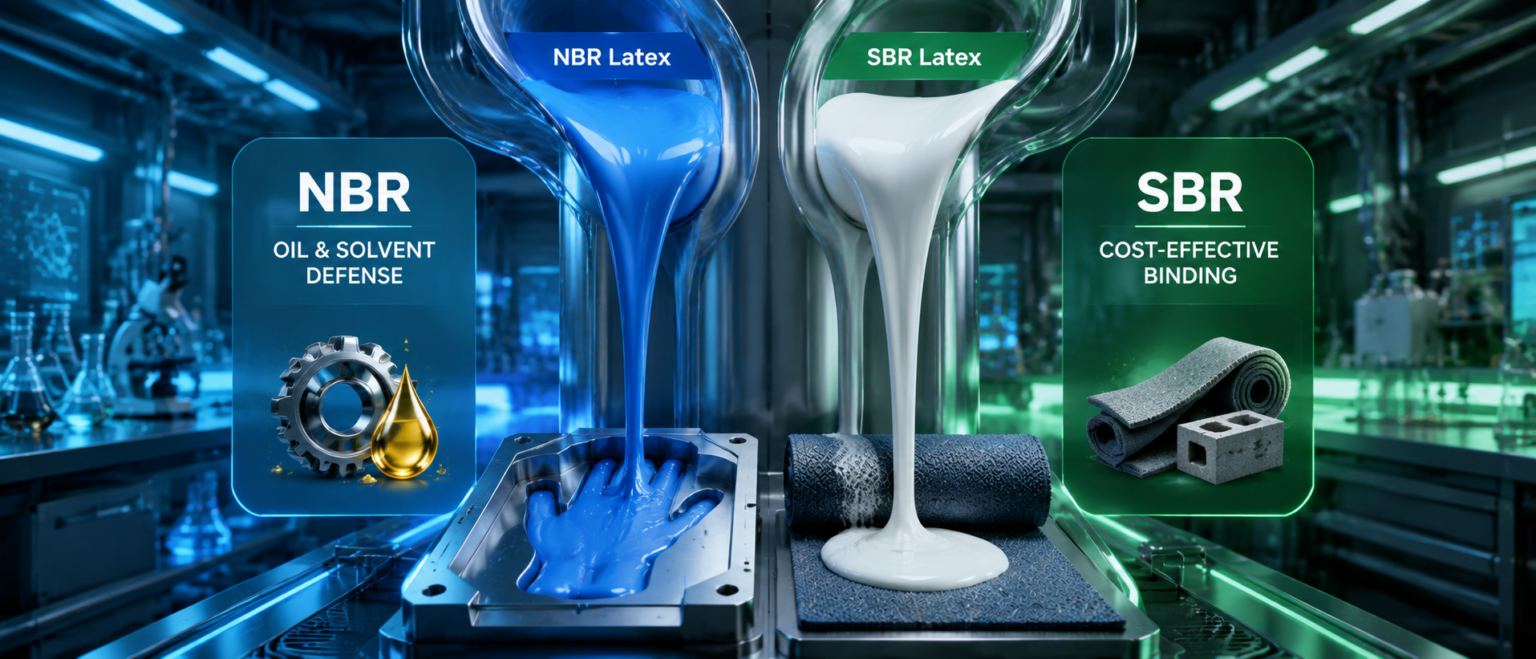
NBR Latex: A copolymer of butadiene and acrylonitrile. The incorporation of polar nitrile groups provides exceptional resistance to oils, greases, and petroleum-based hydrocarbons.
SBR Latex: A copolymer of styrene and butadiene. The styrene phenyl rings impart high rigidity, excellent binding strength, and cost-effectiveness, but lack oil and solvent defense.
3. Key Performance Comparison
| Performance Metric | NBR Latex | SBR Latex |
| Oil & Solvent Resistance | Excellent (Resists oils, greases, and fuels) | Poor to Moderate (Swells and degrades in oils) |
| Film & Tensile Strength | High tear and puncture resistance | High dry tensile and binding strength |
| Cost Efficiency | Premium grade (Higher material cost) | Cost-effective (Economical for bulk binding) |
| Primary Applications | Protective gloves, oil seals, dipped goods, specialty coatings | Carpet backing, artificial turf binders, paper coating, construction adhesives |
4. Application-Driven Selection
Choose NBR Latex when: Your application demands barrier protection against chemicals, animal fats, or mineral oils. It is the gold standard for medical and industrial dipped goods like high-performance gloves and specialized technical coatings.
Choose SBR Latex when: Your project requires robust mechanical binding, high friction, or cost-sensitive structural adhesion. It dominates applications such as carpet backing, paper coatings, construction mortar modification, and bonded non-wovens.
5. Frequently Asked Questions (FAQ)
Q1: Can SBR latex replace NBR latex in oil-resistant applications?
A: No. SBR latex lacks the polar nitrile groups necessary to withstand hydrocarbons, causing it to swell and degrade rapidly when exposed to oils and greases.
Q2: Why is SBR latex more commonly used in carpet backing and construction?
A: SBR latex offers excellent dry binding strength, flexibility, and strong adhesion to fibers and aggregates at a significantly lower raw material cost.
Conclusion
Selecting between NBR and SBR latex depends entirely on your operational environment.