
NBR Latex Gloves: Disposable, Work, and Heavy-Duty Oil-Resistant Protection Levels
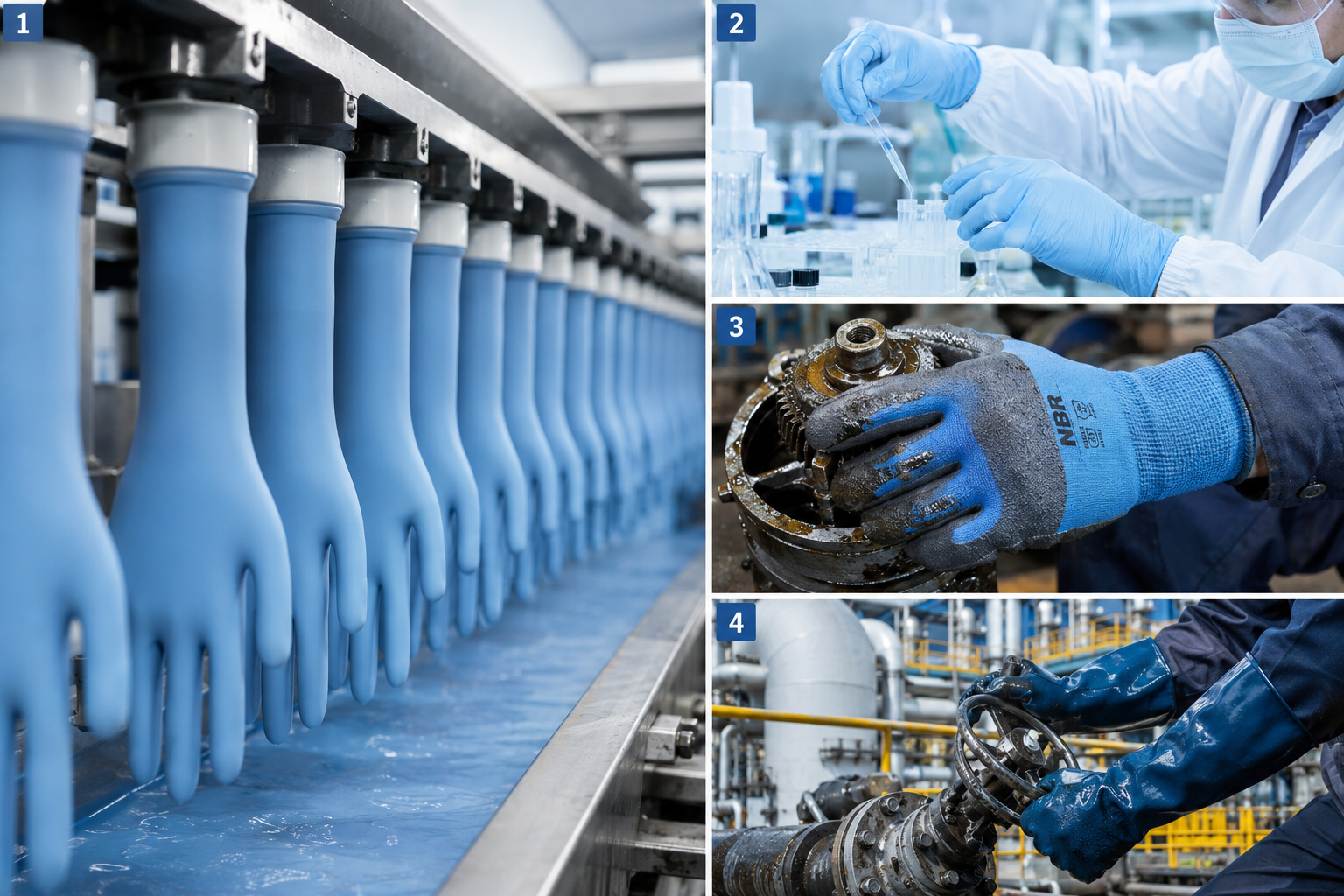
A quick technical guide to Nitrile Butadiene Rubber (NBR) latex performance across medical, general work, and heavy-duty applications.
Quick Overview: The Three Tiers of NBR Protection:
Nitrile Butadiene Rubber (NBR) latex is a synthetic polymer free of natural rubber proteins, making it the ideal hypoallergenic choice for modern PPE. Depending on the application, NBR latex is engineered into three distinct protection tiers:
Protection Tier | Typical Thickness | Primary Substrate | Key Application & Strength |
1. Disposable Exam | 0.05 – 0.09 mm | Unsupported Film | Medical diagnostics & labs; high tactile sensitivity and AQL 1.5 barrier protection. |
2. General Work | 1.0 – 1.5 mm (coating) | Knitted Liner (Nylon/Polyester) | Automotive & assembly; balances dexterity, breathability, and grip. |
3. Heavy-Duty Industrial | 1.8 – 2.5+ mm | Heavy Cotton / Interlock Liner | Petrochemicals & machining; maximum hydrocarbon resistance and puncture durability. |
Core Technical Advantages by Tier:
1. Disposable NBR Gloves (Precision & Barrier)
High Tactile Sensitivity: Thin-film profile (2–3.5 mils) ensures unhindered finger movement.
Strict Quality Standards: Meets ASTM D5151 / ISO 2859 pinhole standards (AQL ≤ 1.5).
Ideal Sectors: Healthcare, food processing, electronics assembly, and pharmaceuticals.
2. General Industrial Work Gloves (Dipped & Supported)
Coating Variations: Available in Full Dip (liquid-proof), Palm Dip (breathable grip), and Three-Quarter Dip (knuckle protection).
Micro-Foam Technology: Foam nitrile structures act like suction cups to channel away oils, maintaining high friction on wet/slippery components.
3. Heavy-Duty Oil-Resistant Gloves (Extreme Environments)
Hydrocarbon Resistance: Resists swelling and degradation against crude oil, diesel, and cutting coolants.
Mechanical Strength: Certified to EN 388 / ANSI standards for high-level abrasion and puncture resistance against sharp metal burrs.
Frequently Asked Questions (FAQ)
Q1: Why choose NBR latex over natural rubber latex (NRL) for industrial and medical use?
A: NBR latex is completely free of natural rubber proteins, eliminating the risk of Type I latex allergies. Furthermore, NBR offers significantly superior resistance to petroleum oils, greases, hydrocarbons, and organic solvents compared to natural rubber.
Q2: How do I choose between a palm-dipped and a fully-dipped general work glove?
A: Choose a palm-dipped glove (often with micro-foam or sandy finish) when breathability and superior dry/wet grip are required for precision assembly or warehousing. Choose a full-dip glove when complete liquid impermeability against water, mild chemicals, or coolants is necessary.
Q3: What standards apply to heavy-duty industrial NBR gloves?
A: Heavy-duty NBR work gloves are typically evaluated under EN 388 (in Europe) or ANSI/ISEA 105 (in North America) standards, focusing on high-level ratings for abrasion resistance, blade cut resistance, tear resistance, and puncture protection.
Conclusion & Next Steps
Understanding these technical distinctions ensures correct product selection, worker safety, and regulatory compliance.